
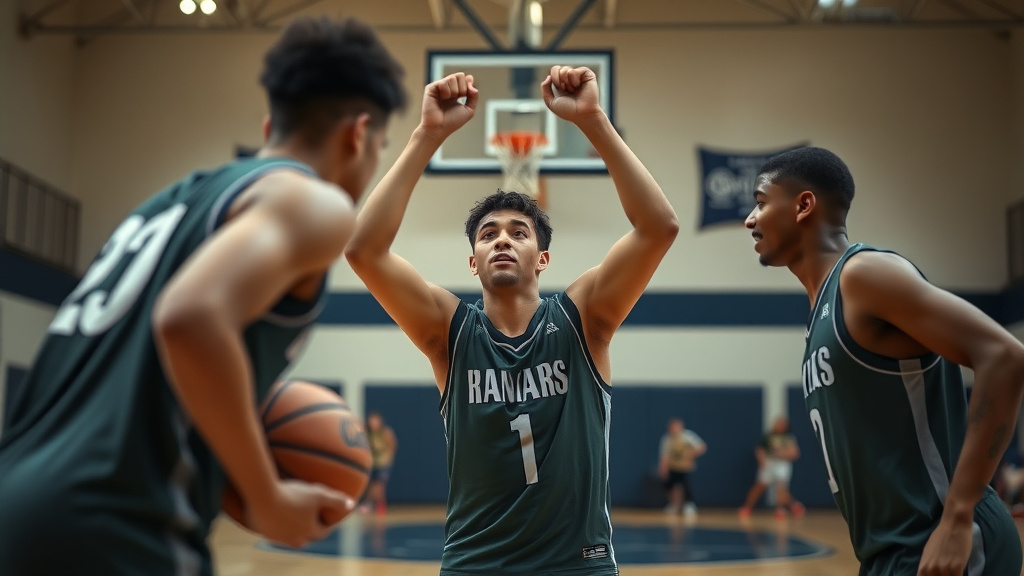
Defense secures championships—a timeless basketball principle that emerging athletes are increasingly prioritizing. While scoring abilities often dominate attention, perfecting defensive fundamentals is the hidden weapon that transforms average players into game-changers. This article examines essential defensive strategies, from footwork fundamentals to positioning principles, that instructors are developing the upcoming wave of basketball standouts. Learn how these proven techniques elevate players’ competitive edge and reveal their full winning potential on the court.
Mastering the Essentials of Defensive Placement
Defensive positioning forms the cornerstone of solid basketball defense, demanding young players to understand spacing awareness and game flow. Sound positioning permits defenders to predict opponent positioning, cut off passing lanes, and defend shots without fouling. When players master these basic principles early in their growth, they establish a defensive foundation that translates throughout their basketball journeys. Coaches highlight that positioning isn’t about physical attributes alone; it’s about intelligence, anticipation, and consistent execution that transforms defensive potential into real winning plays.
The relationship between positioning and team defense cannot be understated in contemporary basketball. Young players who understand where to stand relative to their opponents, teammates, and the basket establish defensive structures that opponents find difficult to break through. Effective positioning reduces defensive breakdowns, reduces help-defense rotations, and allows players to play with confidence without second-guessing their responsibilities. When entire teams apply proper positioning principles regularly, they develop defensive systems that confound opponents and generate turnovers, ultimately providing the competitive advantage necessary for elite performance.
Essential Stance and Footwork
Creating the right defensive stance is the first step toward transforming into an elite defender at any level of competition. Young players must master the skill of set their feet with feet shoulder-width apart, holding their knees in a bent position and their body positioned low. This defensive posture delivers the stability necessary for quick lateral movements and explosive opening steps that differentiate elite defenders from typical players. A proper stance also strengthens balance when transitioning defensively and allows players maintain positioning when opponents try to create space through bodily contact or misleading movements.
Footwork excellence distinguishes championship-caliber defenders from those who struggle with maintaining defensive standards. Young players must build swift, regulated steps that help them maintain position ahead of their opponents while maintaining appropriate spacing and alignment. Slide steps, crossing steps, and retreat steps each serve particular defensive functions that coaches drill repeatedly during practice. When combined with correct stance basics, exceptional footwork permits defenders to react quickly to opponent movements, dispute shots effectively, and recover from lapses in defense that might otherwise lead to open scoring opportunities.
- Keep feet shoulder-width apart for maximum balance and stability
- Bend knees deeply to lower center of gravity efficiently
- Use rapid sliding movements to preserve defensive positioning
- Practice explosive first-step movements for lateral quickness
- Maintain engaged hand movement while remaining low during defense
Understanding Defense Approaches and Game Strategy
Defense strategy forms the base of competitive basketball, compelling young players to cultivate a comprehensive understanding of team positioning and tactical execution. Coaches highlight that effective defense extends beyond individual effort, demanding coordinated positioning, verbal coordination, and reading ahead. Players must interpret opponents’ positioning, predict plays, and align themselves strategically to break up offensive momentum. This structured method shifts defense from passive to active, helping teams manage game speed and produce scoring chances through forced turnovers and defensive rebounds.
Game plans act as foundations for defensive success, adapting tactics to capitalize on opponent weaknesses and limit their advantages. Young players benefit from studying various defensive schemes, recognizing when to intensify pressure and when to keep proper spacing. Coaches hold film study sessions where athletes examine opposing teams’ patterns, habits and key players. This groundwork develops confidence and decision-making abilities, helping players to carry out defensive assignments automatically when pressure is high. Careful planning converts individual skills into unified team defense.
Man-to-Man Defense Techniques
Man-to-man defense represents the fundamental defensive principle where each player takes on the duty of guarding a designated adversary. This strategy fosters individual accountability while requiring ongoing dialogue and adjustment. Young players develop the ability to sustain proper defensive stance, using active hands and side-to-side movement to stay in front of their opponent and the goal. The technique stresses body positioning, defensive pressure, and recovery movement. Perfecting man-to-man defense builds confidence and establishes the groundwork for understanding advanced defensive strategies.
Solid man-to-man defense demands sustained intensity and physical conditioning. Players must maintain a low stance, travel across the floor without tangling their feet, and avoid reaching fouls while preserving defensive pressure. Coaches train young competitors to use their body as a barrier, eliminating open passing options and creating challenging shot attempts. Help-side coverage and rotational help become essential when offensive players attempt to exploit mismatches. Through regular skill repetition and competitive scenarios, young players build the automatic responses required to perform man-to-man fundamentals successfully.
- Maintain low athletic stance with flexed knees throughout possession
- Keep hands moving to disrupt passing lanes and contest shots effectively
- Use lateral footwork to stay in front of dribbling opponents always
- Communicate regularly with teammates about pick coverage and rotations
- Recover quickly after lapses in coverage to stop uncontested scoring
Strengthening Psychological Resilience and Game Awareness
Mental toughness sets apart elite defenders from average players, demanding young athletes to build unwavering focus and mental strength during intense situations. Coaches highlight visualization strategies, positive self-talk, and breathing control techniques to help players stay calm when confronting aggressive opponents. Creating this psychological framework enables young defenders to perform skills reliably, recover from mistakes quickly, and sustain peak performance throughout entire games, no matter the conditions.
Game awareness converts reactive defenders into forward-thinking defenders who read plays before they unfold. Young players examine opponent tendencies, understand offensive schemes, and gain positional advantage by reviewing game footage and studying performance metrics. This deep grasp of game fundamentals allows defenders to think strategically, coordinate with others, and force mistakes that shift momentum decisively in their favor of their team during important times.
Analyzing Opposition Movement
Reading opposing player actions is a essential ability that enables young defenders to predict what’s coming and react defensively with precision and timing. By analyzing body language, footwork patterns, and eye movement, players gain the capacity to predict whether opponents will drive, shoot, or pass. This anticipatory awareness allows defenders to position themselves optimally, challenge shots with intensity, and disrupt offensive plays before they fully develop, generating turnovers and defensive advantages.
Developing this skill demands ongoing repetition studying real match conditions and recorded footage of opposing teams. Young players gain proficiency in spotting subtle cues like stance alignment, touch patterns, and center of gravity that suggest attacking plans. Coaches direct athletes through drill work that emphasizes awareness and rapid choices, establishing mental connections that facilitate immediate responses during competitive situations when fraction-of-second execution dictates stopping opponents.
- Watch shoulder rotation to forecast shot or pass actions right away
- Monitor foot positioning to anticipate direction of drives and offensive movement
- Analyze patterns in ball handling to identify crossover or hesitation moves
- Track eye movement to identify where opponents intend to strike
- Study how weight is distributed to recognize jump shot preparation cues
Practice Sessions That Create Top-Tier Defenders
Building elite defenders requires dedicated training that focuses on specific skill areas. Elite defensive programs include progressive drills that test young players to execute techniques in competitive conditions. These organized drills strengthen muscle memory, reaction speed, and game awareness simultaneously. Coaches structure training to emphasize foundational defensive techniques while gradually increasing complexity and intensity. By practicing established techniques, young athletes master defensive fundamentals that occur automatically during official competition.
The most successful defensive training programs combine individual skill development with team-oriented scenarios. Young players thrive with drills that stress communication, positioning awareness, and help-side defense principles. Step-by-step progression in difficulty ensure players continue to be pushed while strengthening confidence in their abilities. Coaches monitor performance metrics to recognize development opportunities and adjust training accordingly. This performance-focused strategy to defensive development ensures young athletes reach their peak performance and play a vital role in team success.
Applied Exercises for Skill Development
Practical defensive exercises convert theoretical knowledge into actionable skills young players can execute during games. Quality drills simulate real-game situations while allowing coaches to provide immediate corrections and guidance. These exercises build foot coordination, lateral quickness, and positioning on defense simultaneously. Players practice maintaining defensive posture while moving in various directions, building the physical conditioning necessary for ongoing defensive quality. Repetition of fundamental drills creates reflexive actions that players implement without conscious thought during competition.
Including game-speed drills into training sessions prepares developing defenders for real match conditions and speed. Coaches use competitive drills that motivate players while developing defensive abilities progressively. Small-sided games and one-on-one matchups create key opportunities for players to apply acquired skills against real defenders. These game-realistic exercises develop decision-making skills and defensive confidence simultaneously. Youth defenders who train at game speed show markedly better defensive execution when participating in official competitions.
- One-on-one isolation drills establishing individual defensive fundamentals and foot positioning
- Lateral shuffle exercises enhancing quickness and defensive stance consistency
- Help-side rotation drills focusing on team defense and communication skills
- Close-out drills mimicking game-speed approaches to outside shooters
- Transition defense drills readying players for fast-break situations
